
Solutions — Community Access
Community Access Built Around the Way Your Property Operates
AT&I helps HOAs, condominium associations, and professionally managed communities across South Florida simplify entry, reduce administrative friction, and give management teams greater control over activity throughout the property.
When Access Breaks Down, Operations Feel It
A failed gate does not stay a gate problem. It becomes a resident complaint, then a board meeting, then a line item nobody wants to revisit twice. AT&I gives management teams an easy way to oversee entry, verify activity, and answer questions with confidence. Gate entry, telephone entry, access control, and video all run on a connected cloud-managed platform, so staff can check status, pull an entry log, or confirm who came through the gate at 2 a.m. without jumping between systems. When the board asks for an explanation, the record is already there.

That consistency matters most in complex residential environments, where a single access issue can affect daily routines across the property. Teams need technology they can rely on, with information that is easy to verify when questions arise.
What Effective Community Access Needs to Do
Every property has its own mix of gates, entry points, and shared spaces to manage. The right approach connects those functions in a way that simplifies administration, keeps entry moving, and gives staff a consistent way to manage access across the community.
Gate Entry and LPR
Swing and slide gate operators, license plate recognition, and vehicle access management keep traffic moving without compromising control at the entrance.
Learn MoreTelephone Entry
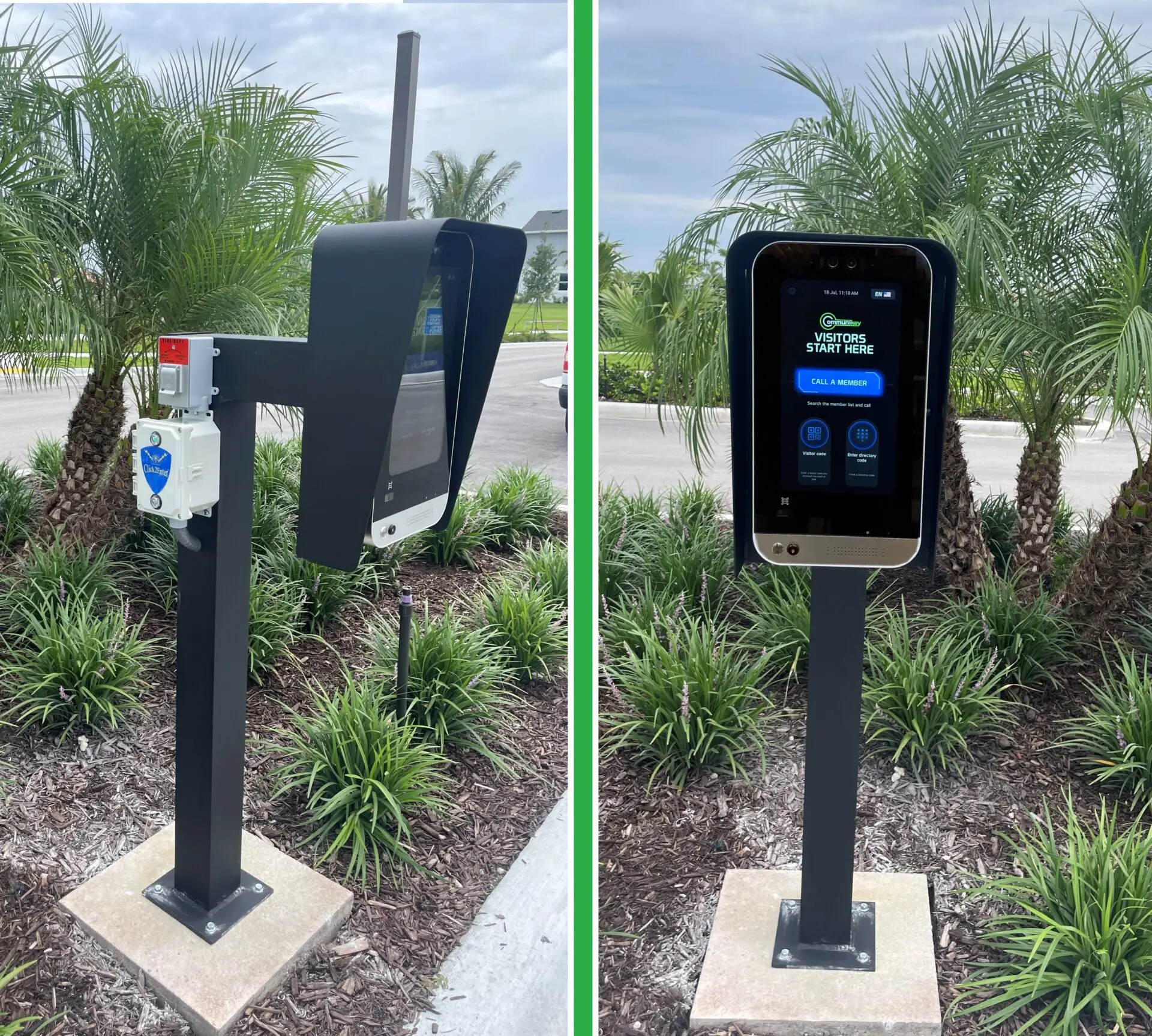
Telephone entry systems give residents and guests a dependable way to request access while giving management a consistent way to review entry requests when questions come up.
Learn MoreAccess Control and Credentialing
Credential-based access across clubhouses, amenity spaces, guardhouses, and staff areas gives management a clearer way to control permissions as access needs change.
Learn MoreCloud-Managed Video
Cloud-managed video gives property managers and authorized board members remote visibility into gates, perimeters, and shared amenities without requiring an on-site visit.
Learn MoreGuest and Vendor Management
Manage guest and vendor entry alongside resident access, giving staff a more consistent way to confirm arrivals, deliveries, and service access.
Learn MoreAccess History & Reporting
Give boards and management teams a clear record of access activity without pulling information from separate systems, making it easier to answer resident questions and document what happened when issues arise.
Learn MoreBuilt for Every Part of the Community
AT&I supports HOAs, condominium associations, gated communities, and multi-building residential portfolios across South Florida with an approach designed for the operational demands of shared residential environments and the people responsible for managing them.


Real Solutions for Complex Communities
See how AT&I helps South Florida communities solve complex access, security, and property-management challenges.

Four independently operated towers, nearly 5,000 residents, and 65 oceanfront acres now run on one Avigilon ALTA platform, with dedicated coverage along the beach perimeter that was previously unmonitored.
View Success Story
A gated community with a full-time guardhouse operation now runs cameras and access control together on one cloud-managed platform, bringing credential-based access to the clubhouse and guardhouse.
View Success Story
A five-building waterfront community consolidated access control while keeping the condominium and yacht club on fully separate databases, preserving independent administration without giving up centralized oversight.
View Success StoryTechnology Built for Community Access
Community access rarely depends on a single product. AT&I brings together proven technologies for gate operation, telephone entry, access control, video security, and vehicle identification to create a system designed around the way your property actually operates.



Verkada
Cloud-managed video, access control, and intercom built on a single platform. AT&I deploys Verkada across community entrances, amenities, and shared spaces to give management unified visibility and simple, centralized administration.
Learn MoreGive Your Team a Better Way to Manage Access
Whether you’re replacing an aging gate system, dealing with recurring entry problems, modernizing a guardhouse, or looking to connect access and video across the property, AT&I can help you build a more reliable approach.
We start with how your community operates today—residents, guests, vendors, vehicles, amenities, and management requirements—then design the technology and support model around it.